
UK Government Expands Police Facial Recognition Despite Civil Liberties Backlash
The Metropolitan Police will install permanent facial recognition cameras across London’s West End and Soho by the end of 2026, a decision that crystallises a peculiar democratic problem: the technology expanded before the law existed to govern it, public concern mounted after deployment became routine, and the government now proposes regulation for a system already operating at scale across Britain.
Every police force in England and Wales now uses facial recognition in some form, according to civil liberties organisation Liberty. The Metropolitan Police announced its expansion plans following a six-month pilot in Croydon, despite the government only now consulting on a legal framework for the technology. The sequence matters. The cameras went up first. The rules follow later.
This reversal of process creates accountability gaps that persist regardless of how carefully the eventual framework is designed. When oversight arrives after implementation, it functions less as governance and more as documentation of decisions already made elsewhere. The Metropolitan Police determined where cameras would go, which faces would populate watchlists, and what constitutes sufficient grounds for a match. Democratic institutions received notification, not veto authority.
The government’s consultation document commits to developing rules for “overt use of facial recognition by law enforcement organisations.” The phrasing is narrower than it appears. It excludes retrospective facial recognition, where police match images after the fact from existing footage. It excludes private sector deployments in retail spaces, which have proliferated without statutory basis. It addresses only the most visible applications of technology that operates primarily through invisibility.
Public opinion research conducted by King’s College London and Liberty in June 2025 found substantial unease, though the government proceeded regardless. The survey of over 2,000 adults revealed concerns about mission creep, accuracy, and the absence of meaningful consent when walking through surveilled public space. These findings did not pause deployment. They informed a consultation running parallel to expansion already underway.
Scotland has taken a different approach, with ministers confirming their intention to ensure legal frameworks exist before police deployments begin. This creates a natural experiment within the United Kingdom. One jurisdiction installs cameras then writes rules. Another writes rules then considers cameras. The divergence suggests the sequence is a choice, not an inevitability imposed by urgent security requirements.
The governance problem extends beyond British borders. Similar patterns have emerged in the United States, where Immigration and Customs Enforcement expanded biometric surveillance capabilities while legislative oversight lagged. The technology moves faster than democratic process, creating installed bases that become politically difficult to remove even when public support proves uncertain.
Civil liberties groups identify a more fundamental problem than the speed of adoption. Liberty won a legal challenge against South Wales Police’s use of facial recognition in 2020, establishing that the technology violated privacy rights and equality law. The judgment did not halt expansion. Every police force continued developing capabilities. The litigation established legal principles without creating effective mechanisms to enforce them at the system level.
Big Brother Watch warns the government plans “the largest ever rollout” of live facial recognition, language that acknowledges scale without addressing the accountability deficit that scale creates. Once thousands of cameras feed into centralised databases, the practical difficulty of reversal increases exponentially. Technical infrastructure creates path dependencies that constrain future political choices.
The Biometrics and Surveillance Camera Commissioner, the existing oversight body, has backed expanded authority including potential jurisdiction over public-space surveillance systems in Scotland. This represents recognition that current oversight mechanisms lack sufficient scope. But expanded mandates for regulators do not resolve the core tension: technology deployed without prior legal authorisation creates facts on the ground that post-implementation oversight struggles to meaningfully constrain.
Private sector adoption compounds the accountability problem. Retail spaces across Britain have installed facial recognition systems to prevent theft, operating under existing data protection law but without sector-specific regulation. Facewatch, the largest provider to British retailers, recently obtained certification under a voluntary AI governance standard. Voluntary certification by commercial operators exists in the space where mandatory legislative frameworks have yet to arrive.
The central question is not whether facial recognition serves legitimate security purposes. The technology demonstrably assists in locating wanted individuals and may deter certain crimes. The question is who decides when deployment has exceeded democratic consent, and through what mechanism that judgment gains enforceable authority.
The British government is consulting on rules for a system already operating nationwide. That sequence defines the governance gap. Democratic oversight that arrives after implementation becomes documentation rather than decision making. The cameras are already watching. The debate is over what paperwork should accompany them.
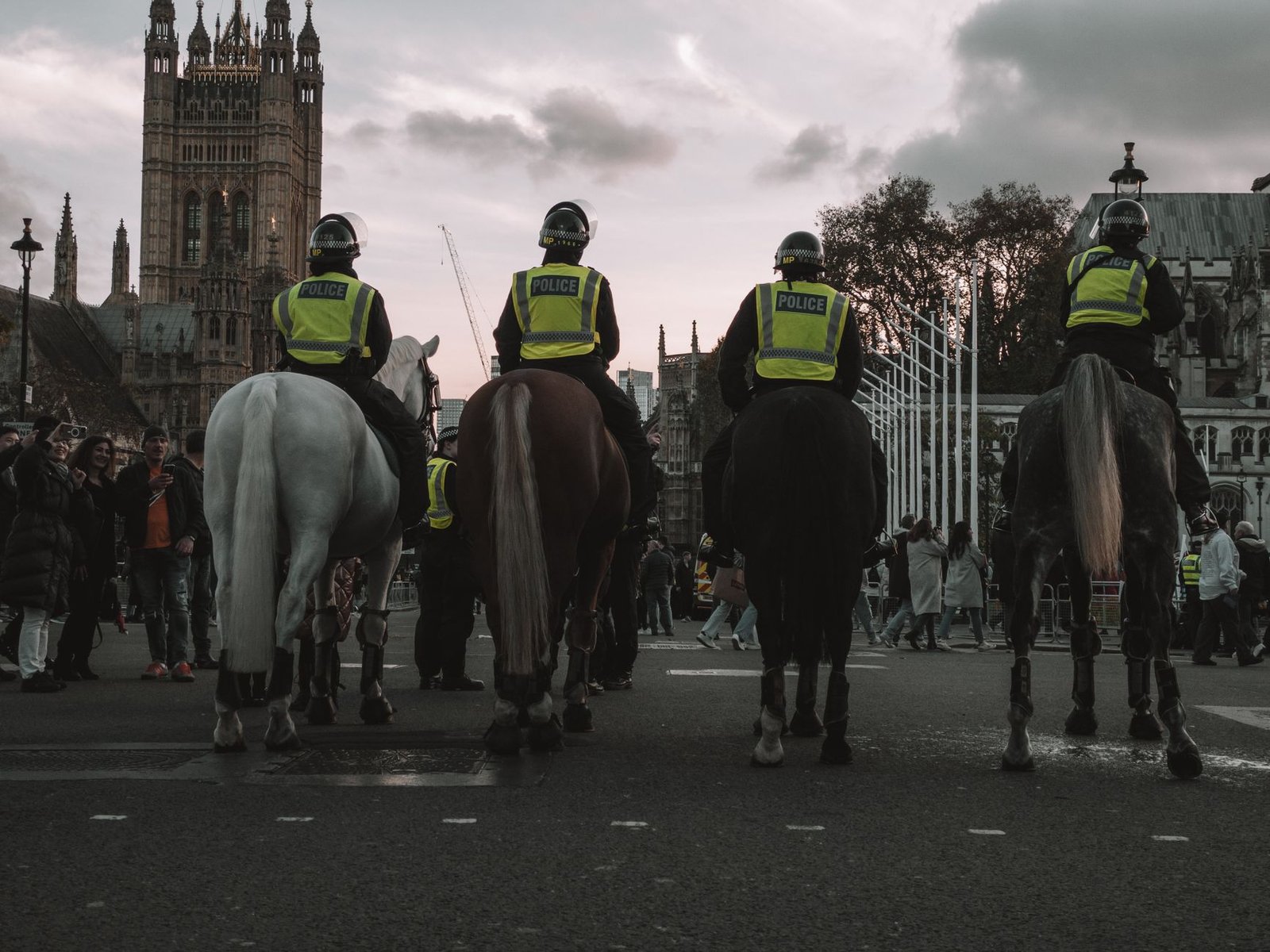
Photo: Lauren Boswell via Pexels
By Fidelis News Staff | 27 June 2026
Fidelis News is free to read but not free to make.
If you find value in independent analysis, please consider
buying us a coffee.