Trump Under Pressure as Congress Questions Strategy Toward Iran
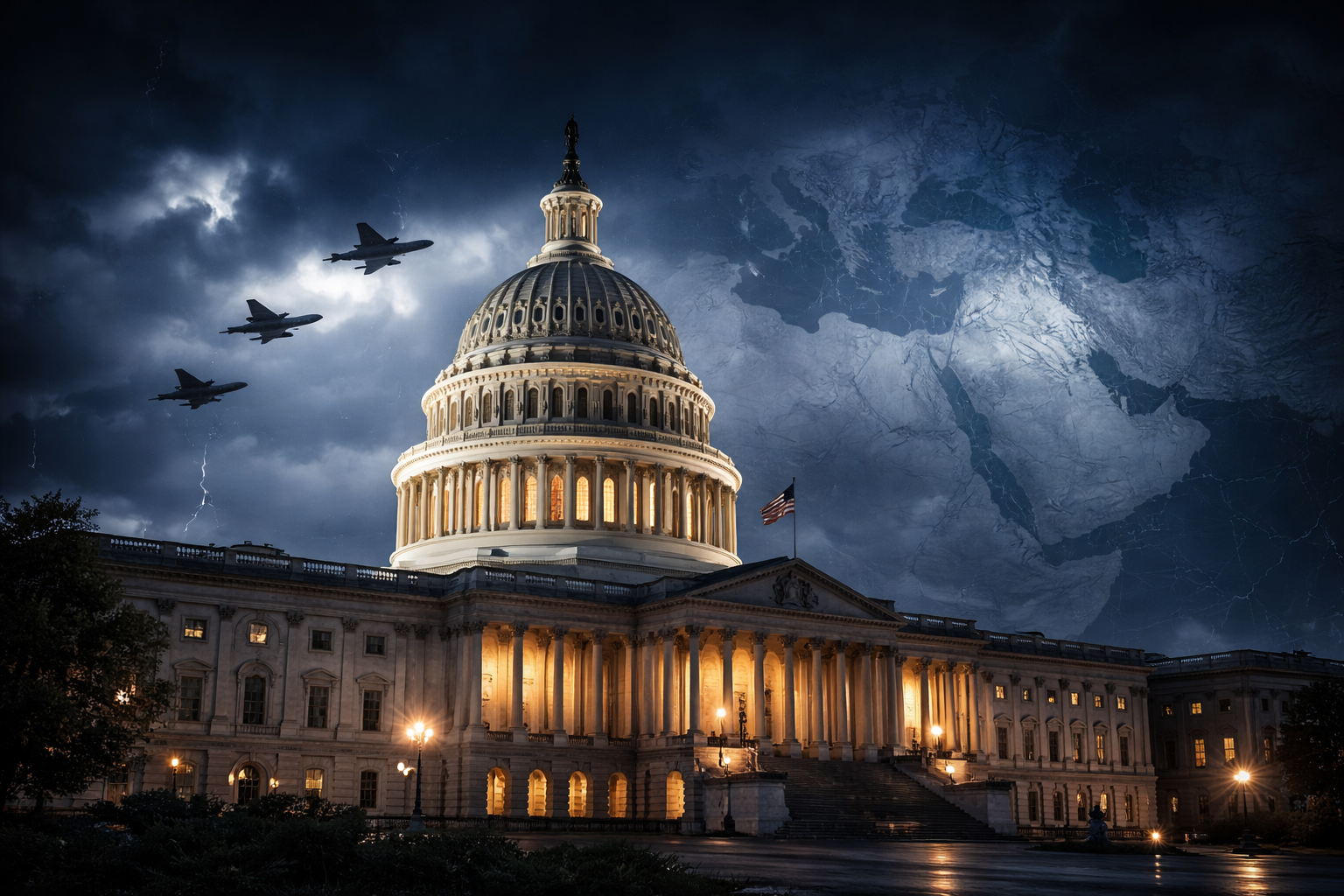
<p>President Donald Trump faces growing political pressure in Washington as tensions with Iran escalate, exposing deep divisions in Congress and uncertainty among voters about the prospect of another major Middle Eastern conflict.</p>
<p>The debate intensified this week as lawmakers from both parties demanded greater clarity from the White House about the administration’s objectives in confronting Tehran. Members of Congress say they have received limited information about the administration’s strategy, raising familiar questions about presidential authority to initiate military action without explicit legislative approval.</p>
<p>Several Republican senators who typically support Trump’s foreign policy have begun pressing the administration to explain its long term goals. Senator Lindsey Graham told reporters that the White House must outline “clear objectives and a realistic timeline” if the United States moves toward sustained military confrontation with Iran.</p>
<p>Those concerns reflect a broader anxiety inside Congress that the United States could drift into another prolonged regional conflict without a defined political end state. Lawmakers from both parties say the lessons of Iraq and Afghanistan still weigh heavily on the public and on the political system that authorised those wars.</p>
<p>The administration initially framed its actions against Iran as defensive measures aimed at protecting American personnel and regional allies. But as rhetoric from Washington hardened, critics began warning that the strategy appeared to be shifting toward a more ambitious goal of weakening or even destabilising the Iranian government.</p>
<p>Democratic leaders have moved quickly to challenge the president’s authority. House Speaker Nancy Pelosi has signalled that the House may consider legislation requiring the administration to seek congressional approval for any extended military campaign against Iran.</p>
<p>Such resolutions have limited practical power if the Senate refuses to act, but they force members of Congress to publicly declare their position on military escalation. That dynamic becomes especially sensitive during election cycles when voters are wary of overseas conflict.</p>
<p>Public opinion reflects that hesitation. Polling over the past decade consistently shows Americans sceptical of large scale military involvement in the Middle East. Support for intervention tends to rise sharply after direct attacks on US forces or territory, but declines quickly when conflicts appear open ended or poorly defined.</p>
<p>The political risks for Trump are particularly complex because many of his most loyal supporters backed him on the promise that he would avoid the kind of prolonged wars that characterised earlier administrations.</p>
<p>Throughout his first presidential campaign, Trump criticised the Iraq War and argued that American foreign policy had become trapped in costly interventions that produced little strategic benefit. That message resonated strongly with voters who felt Washington had ignored the human and financial cost of two decades of conflict.</p>
<p>Any sustained confrontation with Iran therefore carries a unique political tension for the president. Escalation risks alienating voters who supported him as an opponent of endless wars. Yet backing down from confrontation could expose him to criticism from political opponents who argue that Iran’s regional influence must be checked through force if necessary.</p>
<p>International reactions have added another layer of pressure. European governments have repeatedly urged restraint, warning that a military conflict with Iran could destabilise the wider Middle East and threaten global energy markets.</p>
<p>Germany and France have both emphasised the importance of diplomatic engagement, while Britain’s position has focused on de-escalation and preserving international monitoring of Iran’s nuclear activities.</p>
<p>The absence of clear allied support would complicate any American military campaign. Previous US operations in the Middle East relied heavily on coalition structures that spread both political responsibility and operational burden across multiple countries.</p>
<p>Without that backing, Washington would face the prospect of managing both the military and diplomatic consequences largely alone.</p>
<p>For now the conflict remains a contest of signals rather than sustained warfare. Military deployments, economic sanctions and political rhetoric all function as tools in a wider strategic confrontation between Washington and Tehran.</p>
<p>But the longer tensions persist, the greater the chance that a miscalculation could transform political pressure into open conflict.</p>
<p>For Trump, the stakes are not only geopolitical but domestic. Foreign policy crises often reshape presidential authority and public opinion in unpredictable ways. In this case, the president must navigate a political landscape where voters remain deeply cautious about military intervention even as Washington debates how aggressively to confront Iran.</p>
<p>The central challenge facing the administration is therefore not simply how to pressure Tehran, but how to do so without repeating the strategic and political mistakes that continue to define America’s most recent wars.</p>
<hr>
<p><em>Fidelis News is independent and reader-supported.<br>
Our reporting is free to read, but not free to produce.<br>
Reader support helps us remain independent and publish in-depth journalism.<br>
Support our work via Buy Me a Coffee.</em></p>