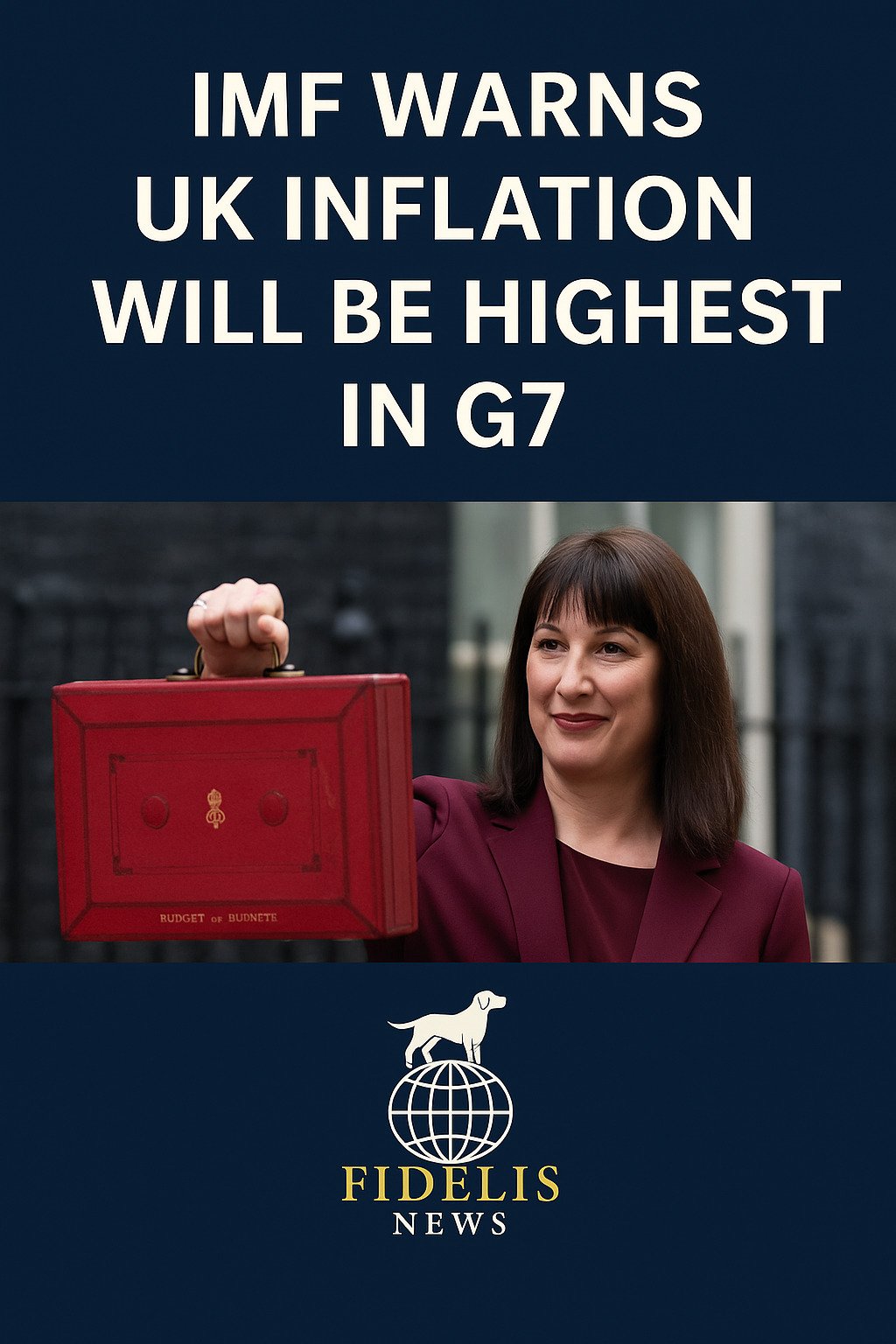
IMF Warns UK Inflation Will Be Highest in the G7, Piling Pressure on Reeves Ahead of Budget
The International Monetary Fund has warned that the United Kingdom is set to record the highest inflation in the G7 in 2025 and remain elevated into 2026, intensifying scrutiny of the government’s fiscal plans and the Bank of England’s rate path ahead of the Autumn Budget. The IMF’s latest World Economic Outlook points to sticky domestic price pressures, citing wage growth and persistent costs in energy, transport, and housing.
What the IMF says
In updated projections, the IMF expects UK inflation to stay above that of other advanced economies through 2025 before easing in 2026. While the Fund nudged UK growth modestly higher next year, it warned that entrenched price expectations could keep inflation elevated unless policy remains tight and credible. The assessment raises the risk that interest rates stay higher for longer, delaying relief for mortgage holders and businesses.
Why this matters for households
Persistently high inflation erodes purchasing power and squeezes household budgets. Food, rents, transport, and utilities have been key pressure points in recent months, with headline inflation outpacing average pay for parts of the year. If rate cuts are pushed further out, homeowners rolling off fixed-rate deals could face renewed repayment pressure just as broader living costs remain elevated.
Pressure on the Chancellor and the Bank of England
The IMF’s warning lands weeks before the Autumn Budget, sharpening the challenge for the Chancellor to balance fiscal credibility with support for growth. Higher-for-longer inflation complicates revenue and spending assumptions, while tighter financing conditions raise the cost of servicing public debt. Markets will closely watch how the Budget addresses the growth-inflation trade-off, the path for public investment, and any tax or allowance changes.
For the Bank of England, the Fund’s projections reinforce a cautious stance. Policymakers must judge whether recent disinflation is durable or at risk of stalling. If inflation expectations become embedded through wage settlements and price-setting behavior, the Bank may need to keep policy restrictive, even as growth softens.
Market reaction and credibility test
Government bond yields have reflected a premium for inflation and policy uncertainty this autumn. Investors will look for a clear narrative on fiscal rules, the debt trajectory, and measures to expand supply especially planning reform, housing delivery, skills, and energy infrastructure. A credible medium-term plan that supports capacity and productivity can help lower inflation pressures without relying solely on tighter monetary policy.
What could bring inflation down faster
- Energy and supply-side easing: Lower wholesale energy prices and improved supply chains would reduce cost pressures in utilities, transport, and manufacturing.
- Productivity improvements: Reforms that raise productivity can moderate unit labor costs and ease price pressures over time.
- Stable inflation expectations: Clear, coordinated fiscal and monetary signals help prevent a wage-price feedback loop.
- Housing and planning: Faster housing delivery and infrastructure upgrades can relieve structural bottlenecks contributing to higher living costs.
Risks the IMF flags
The Fund highlights several risks: inflation expectations drifting higher; global energy volatility; and weaker external demand. Domestically, if wage growth stays firm while productivity lags, the inflation impulse could persist. Conversely, tightening policy too aggressively risks undercutting growth and jobs before inflation returns sustainably to target.
What to watch next
- Autumn Budget: How the Chancellor balances fiscal restraint with growth-supporting investment and whether the OBR’s outlook aligns with the IMF’s concerns.
- Bank of England guidance: Signals on timing and conditions for any eventual rate cuts if inflation cools more slowly than expected.
- Labor market data: Wage growth and vacancies as indicators of underlying price pressure.
- Inflation prints: Monthly CPI and core measures for signs of renewed stickiness or progress toward target.
The IMF’s analysis underscores the UK’s narrow path: maintain credibility on inflation while supporting supply-side growth. That balance will shape household finances, business investment, and market confidence over the coming year.
Support our work
Fidelis is free to read but not free to make. If you value independent, fact-based journalism, please consider supporting us.
Author: Fidelis News Staff Writer | Date: 11 October 2025